Episode 3: How realistic are AI weather models?
Tune in to the new Weather Generator Video Podcast
Everyone talks about the weather. But how is AI transforming the way we analyze weather data, evaluate forecasts, and push the boundaries of what is scientifically possible?
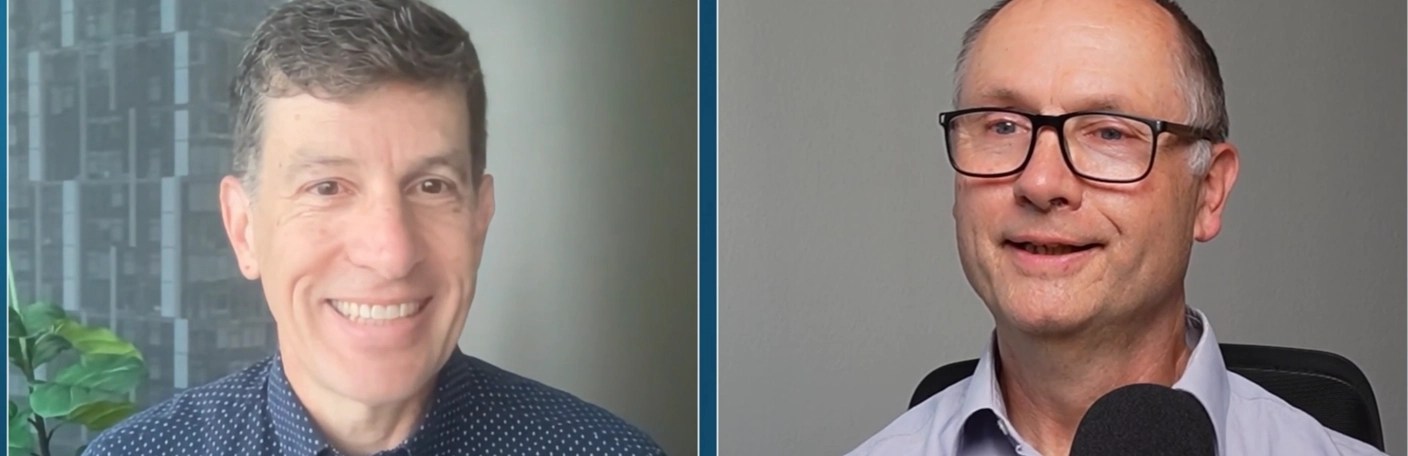
Welcome back to the WeatherGenerator Video Podcast! In our third episode, we explore the physical consistency of AI-based weather models with Gregory Hakim, Professor of Atmospheric Sciences at the University of Washington.
We take a closer look at how AI models learn the physics of the atmosphere, how their predictions can be tested for physical realism, and where their limitations still lie. We discuss how machine learning models respond to artificial atmospheric perturbations, what they can teach us about extreme weather events such as hurricanes, and how AI can help explore physically plausible but previously unseen extreme events – so-called “Gray Swans”. We also examine the challenges of predicting weather and climate across different spatial and temporal scales, the role of observations in training AI models, and the potential of observation-based approaches to improve our understanding of atmospheric physics.
Who is this episode’s guest?
Hosted by Prof. Dr. Martin Schultz, Professor at the University of Cologne and expert in Earth system modelling and machine learning.
Joining him is: Greg Hakim, Professor of Atmospheric Sciences at the University of Washington and leading atmospheric scientist.
Are you curious? Watch the first episode and join the conversation! –> Episode 3: How realistic are AI weather models?