Changing the Forecast: DIVERSITY, NETWORKING & ALLYSHIP IN RESEARCH
Join us for inspiring talks, engaging discussions, and meaningful networking on gender and diversity in research
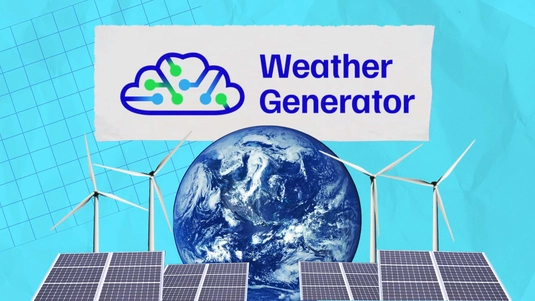
Learn about the aims and vision of the WeatherGenerator in this short animated video
The objective of the WeatherGenerator is to improve weather and climate predictions, enhance renewable energy planning, and provide better tools for mitigating the effect of extreme events like floods and heatwaves. It will combine the latest machine learning with high performance computing, creating a robust tool for scientific discovery and real-world applications.
This way, the WeatherGenerator will ensure Europe remains at the forefront of innovation in weather and climate. The resulting European foundation model will be accessible for many diverse applications in the area of Earth system science.
Join us for inspiring talks, engaging discussions, and meaningful networking on gender and diversity in research
The WeatherGenerator Service Call 2026 invites European research groups and industry partners outside the WeatherGenerator consortium to propose applications or integrations of the WeatherGenerator. Selected projects will receive up to 3 person-months of expert engineering support and will run through 2027. Deadline: 16 October 2026, 14:00 CET.
The WeatherGenerator Community Hackathon 📍 Location: Max Planck Institute for Biogeochemistry, Jena, Germany 📅 Date: 26–28 January 2027 📝 Registration: 1 September – 1 November 2026, via REGISTRATION Join our first Community Hackathon and become part of the WeatherGenerator community! The WeatherGenerator project will host its first Community hackathon on 26–28 January 2027 in Jena, Germany. This in-person, hands-on event will bring together researchers and professionals working across Earth System sciences to explore the WeatherGenerator, exchange ideas and become part of its growing community. The goal is that each participating team can run and fine-tune the WeatherGenerator for its own application while learning from and contributing to the community around the open-source model. The WeatherGenerator is an open-source European foundation model of the Earth system aiming to provide new machine-learned Digital Twin for Destination Earth. It is developed by 16 partners in a Horizon Europe project coordinated by ECMWF. The WeatherGenerator learns an unified latent representation from a wide variety of Earth system datasets - reanalyses, model output, satellite products and in-situ observations - using a self-supervised, masked-token approach. Rather than training a separate model for their task, users can use this general WeatherGenerator foundation model and fine-tune it towards the outputs that matter for their application.
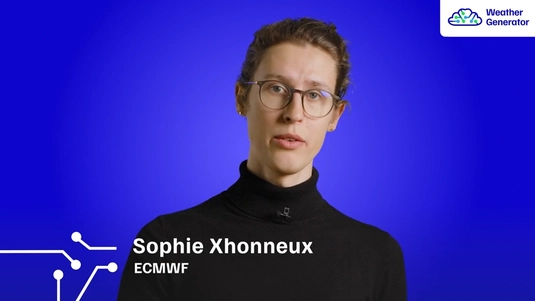
What is representation learning and how does it support smarter weather forecasting? Sophie Xhonneux from ECMWF explores exactly that in the second WeatherGenerator Science Explainer. The atmosphere is measured continuously by satellites, weather stations, and balloons, producing vast, overlapping datasets. Rather than training separate models on all of this data, WeatherGenerator learns a compressed, unified representation that captures the underlying physics of the atmosphere, enabling more efficient and powerful forecasting across applications.
Whether you are early in your career or an experienced researcher, meaningful connections can shape the path ahead. The WeatherGenerator Mentorship Program brings together professionals and researchers across career stages in an informal setting built for honest exchange and growth. The WeatherGenerator Mentorship Program is a 6-month initiative connecting experienced professionals and researchers with early career peers. Mentors share their experiences and perspectives, contributing to a diverse community, while mentees gain space to reflect on their goals, explore career topics, and grow their network.
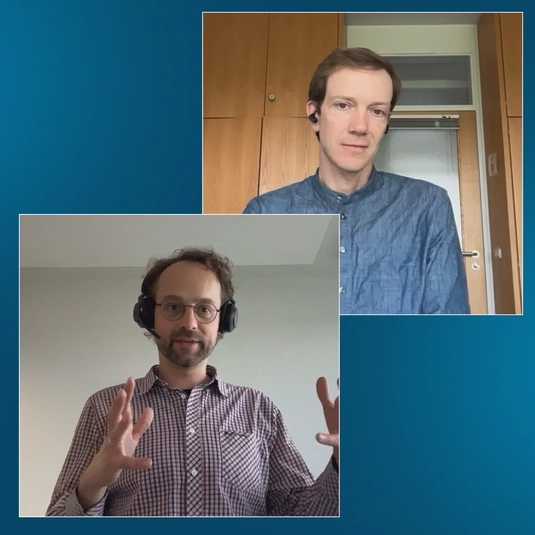
In the first instalment of the WeatherGenerator Science Explainer series, Even Nordhagen from Norwegian Meteorological Institute explains how the WeatherGenerator goes beyond traditional weather models, directly predicting energy - relevant variables like wind power output and reservoir inflow, without the need for separate downstream models. With a built-in long-term memory, the system can track slow-building processes like snowpack and soil moisture, and ultimately learn the full chain from atmospheric conditions to electricity markets.
The WeatherGenerator FastEvaluation package is a flexible, open-source framework designed to bridge the gap between traditional weather forecast verification tools and the rapid iteration demands of modern machine learning–based weather modelling.
Ilaria Luise,
Savvas Melidonis,
Sorcha Owens,
Julius Polz
Running EU-wide Deep Learning projects for Weather The WeatherGenerator project is an ambitious Europe-wide project to build a “Large Language Model for the weather.” From the outset, this leads to a very practical challenge: how to coordinate the development of a state-of-the-art model across 6 High Performance Computing (HPC) systems and 10 research groups? Each HPC system is custom built with the purpose of maximizing processing power at the expense of ease of use or convenience. This experience is very different compared to using a public cloud such as Amazon Web Services, Azure, Google Cloud. Public clouds are meant to be cost effective to build and operate. They are the Ford T’s of large computing: easy to use, simple, adapted to many scenarios. Public cloud operators put a large focus on standardization and automation as well as ease of use for the final customers.
Timothee Hunter,
Christian Lessig
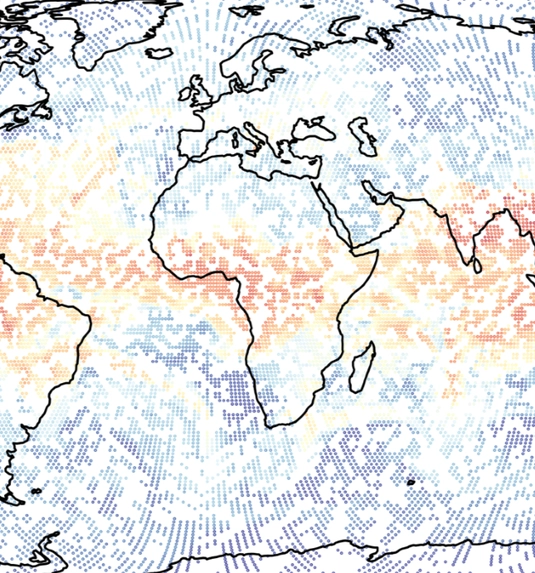
Machine learning powers WeatherGenerator, a global Earth system model for forecasting weather and climate impacts.
Christian Lessig