Skip to Main Content

News

Keep pace with the latest developments of foundation modelling in Earth sciences in general, and the WeatherGenerator in particular.

Subscribe to Our Mailing List

Articles

  • 5 min read

    WeatherGenerator Service Call 2026

    The WeatherGenerator Service Call 2026 invites European research groups and industry partners outside the WeatherGenerator consortium to propose applications or integrations of the WeatherGenerator. Selected projects will receive up to 3 person-months of expert engineering support and will run through 2027. Deadline: 16 October 2026, 14:00 CET.
  • 5 min read

    Registration now open for the WeatherGenerator Community Hackathon

    The WeatherGenerator Community Hackathon 📍 Location: Max Planck Institute for Biogeochemistry, Jena, Germany 📅 Date: 26–28 January 2027 📝 Registration: 1 September – 1 November 2026, via REGISTRATION Join our first Community Hackathon and become part of the WeatherGenerator community! The WeatherGenerator project will host its first Community hackathon on 26–28 January 2027 in Jena, Germany. This in-person, hands-on event will bring together researchers and professionals working across Earth System sciences to explore the WeatherGenerator, exchange ideas and become part of its growing community. The goal is that each participating team can run and fine-tune the WeatherGenerator for its own application while learning from and contributing to the community around the open-source model. The WeatherGenerator is an open-source European foundation model of the Earth system aiming to provide new machine-learned Digital Twin for Destination Earth. It is developed by 16 partners in a Horizon Europe project coordinated by ECMWF. The WeatherGenerator learns an unified latent representation from a wide variety of Earth system datasets - reanalyses, model output, satellite products and in-situ observations - using a self-supervised, masked-token approach. Rather than training a separate model for their task, users can use this general WeatherGenerator foundation model and fine-tune it towards the outputs that matter for their application.

  • 1 min read

    Science Explainer #2: What is representation learning?

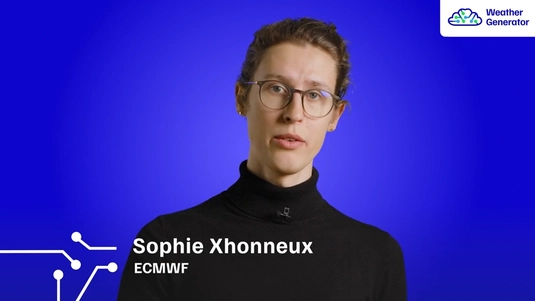
    What is representation learning and how does it support smarter weather forecasting? Sophie Xhonneux from ECMWF explores exactly that in the second WeatherGenerator Science Explainer. The atmosphere is measured continuously by satellites, weather stations, and balloons, producing vast, overlapping datasets. Rather than training separate models on all of this data, WeatherGenerator learns a compressed, unified representation that captures the underlying physics of the atmosphere, enabling more efficient and powerful forecasting across applications.

  • 1 min read

    Looking for Mentors!

    Whether you are early in your career or an experienced researcher, meaningful connections can shape the path ahead. The WeatherGenerator Mentorship Program brings together professionals and researchers across career stages in an informal setting built for honest exchange and growth. The WeatherGenerator Mentorship Program is a 6-month initiative connecting experienced professionals and researchers with early career peers. Mentors share their experiences and perspectives, contributing to a diverse community, while mentees gain space to reflect on their goals, explore career topics, and grow their network.

  • 1 min read

    Science Explainer #1: Can weather models predict power prices?

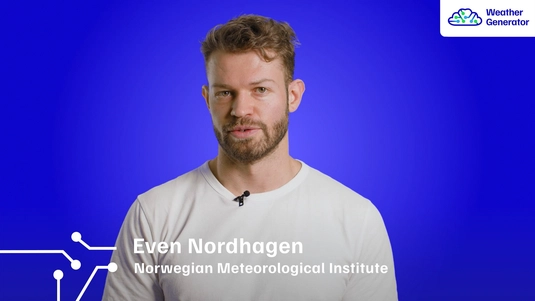
    In the first instalment of the WeatherGenerator Science Explainer series, Even Nordhagen from Norwegian Meteorological Institute explains how the WeatherGenerator goes beyond traditional weather models, directly predicting energy - relevant variables like wind power output and reservoir inflow, without the need for separate downstream models. With a built-in long-term memory, the system can track slow-building processes like snowpack and soil moisture, and ultimately learn the full chain from atmospheric conditions to electricity markets.

  • Video Highlights from Oslo

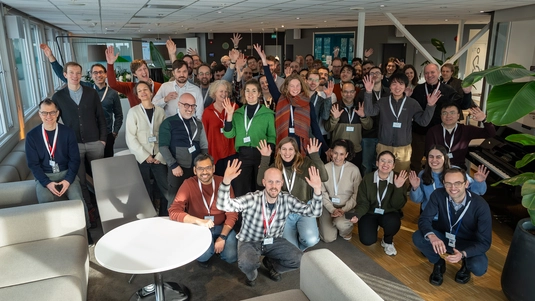
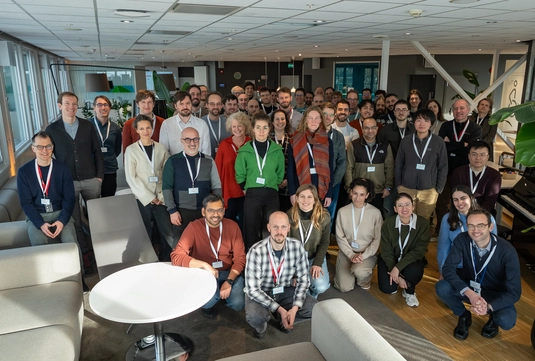
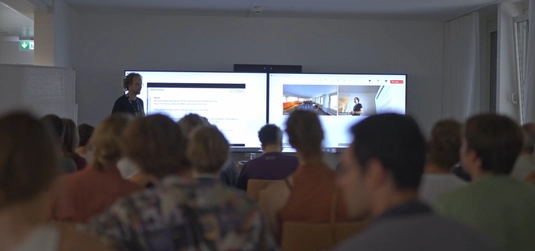
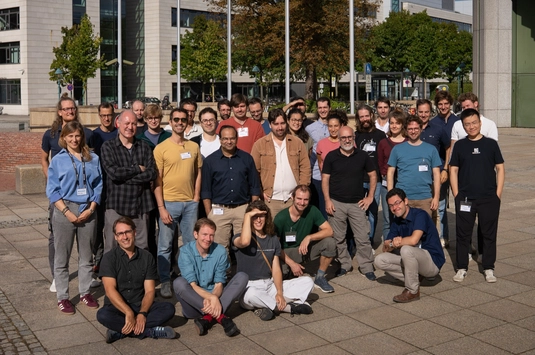
    From 10–12 February 2026 WeatherGenerator project partners and participants met at Forskningsparken – Oslo Science Park, as well as online, for a dynamic programme combining an internal General Assembly, a public Dissemination & Stakeholder Day, and a hands-on Coding Workshop. The programme covered the technical foundations of WeatherGenerator: its architecture, training approach, data formats and applications - alongside contributions from our sister projects TerraDT and UrbanAIR and invited speakers working on AI-driven approaches to weather and climate science, including foundation modelling.